

At Classic Electric, we get the same phone call several times a week. A homeowner wants to install a hot tub, an electric vehicle charger, a portable generator, or some other big-ticket electrical upgrade. The conversation almost always starts the same way: “I don’t know if there’s any room in my panel, it looks completely full.”
The good news? Just because your breaker panel appears packed doesn’t mean it actually is. Many panels are labeled with two numbers (for example, 40/50), and that second number can unlock extra spaces without replacing the entire panel. In this article, we’ll walk you through exactly how to read your panel, understand tandem breakers, interpret the manufacturer’s schematic, and spot the difference between a legitimately full panel and one that still has room.
Why Panel Capacity Matters (and Why It’s Often Misunderstood)
Your electrical panel is the heart of your home’s power system. Every circuit—lights, outlets, appliances—connects through a breaker that snaps onto the bus bars inside the panel. When those slots look occupied, most people assume they’re out of luck. But many panels are designed with “twin” or “tandem” capability, allowing certain positions to accept a single breaker that controls two circuits.
We’ll use a real-world 40/50 Eaton panel as our main example. Visually, it looks stuffed with 40 single-pole breakers. But the label tells a different story.
Step 1: Read the Label on Your Panel
The very first place to look is the panel cover or the inside of the door. Manufacturers print the panel’s true capacity right there—usually in the format “XX YY” or “Spaces/Circuits.”
- 40/50 means the panel has 40 physical slots but can safely accept 50 circuits by using tandem breakers in designated locations.
- 30/40 means 30 slots that can become 40 circuits with tandems.
You’ll also see the amperage rating (typically 200 amps for modern homes). This number tells you the total power the panel can deliver, but the space count tells you how many individual circuits you can actually connect.
On some older or less accessible panels, the information may be on the side of the box or even on the back of the cover. If you can’t find it, don’t guess—call a licensed electrician.
Step 2: Understand Tandem (Twin) Breakers
A standard single-pole breaker controls one circuit and takes up one slot. A tandem breaker looks identical in width but has two handles. It controls two separate circuits while occupying only one physical space in the panel.
Installing a tandem breaker is completely legal and safe when the manufacturer approves it for that location. You simply remove the existing single breaker and snap the tandem in its place. The bus bar in those approved spots is specially designed (more on that in a moment) to accept the extra connection.
Step 3: Follow the Manufacturer’s Schematic
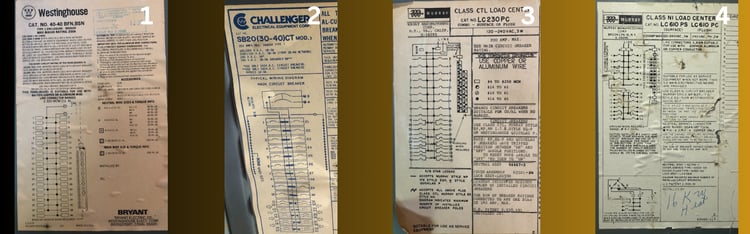
Every panel door includes a diagram showing exactly where tandems are allowed. Here are four common examples:
- Westinghouse 40/40 – No tandem option. The numbers match, so every slot accepts only a single breaker.
- Challenger 30/40 – The bottom five positions on each side are tandem-ready.
- Murray (first example) – Tandems are allowed in specific staggered positions near the bottom (19/21, 25/27, etc.).
- Murray (second, more unusual example) – The pattern is asymmetrical; positions 11-24 have a unique mix of single and tandem slots that does not mirror left-to-right.
Always follow the exact diagram for your brand and model. The allowed tandem locations can change from year to year and even between panels from the same manufacturer.
Step 4: Inspect the Bus Bars (When the Label Is Missing)
Sometimes the sticker has faded or the door diagram is gone. In those cases, you can still determine tandem capability by looking at the bus bars themselves—the metal “teeth” the breakers clip onto.
- Solid bus = only single breakers allowed.
- Forked bus = tandem breakers are approved.
If the bus has a visible fork or notch in the metal, a tandem breaker can snap on securely. If it’s a solid rectangular bar, it cannot. This physical design is how the manufacturer limits tandem use to safe locations.
When a Panel Is Truly Full
Once you’ve installed tandems in every approved position, your panel has reached its listed capacity (the second number on the label). At that point, adding another circuit requires either a sub-panel or a full panel upgrade.
A Critical Safety Warning: Never Modify Breakers
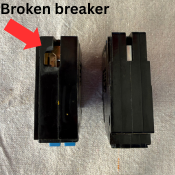
We occasionally see homeowners (or previous “handymen”) who tried to force extra breakers into a full panel by removing the little metal “rejection clip” on the back of a tandem breaker. This clip is a factory safety feature that prevents the breaker from being installed in the wrong location.
Removing it is extremely dangerous. It creates a loose connection that can overheat, arc, or start a fire. The breaker may also fail to trip properly during an overload. If you ever see a tandem breaker installed where the schematic says it doesn’t belong, have a licensed electrician replace it immediately with the correct breaker in the correct spot—or upgrade the panel.
What Should You Do Next?
- Open your panel safely (turn off the main breaker first if you’re uncomfortable).
- Check the label and schematic.
- Count your current circuits and compare against the maximum listed capacity.
- Contact a professional before buying expensive equipment like an EV charger or hot tub. We can perform a load calculation to confirm your panel can actually handle the new demand without tripping or overheating.
Knowing your panel’s true capacity can save you thousands of dollars and weeks of waiting for a full upgrade. In many cases, we’re able to add the new circuit using tandems and proper load balancing.
Ready to Add Power? Let’s Talk.
If you’re in Sherwood or surrounding areas (Tigard, Tualatin, Hillsboro, Wilsonville, Beaverton, Newberg) and thinking about a hot tub, EV charger, generator, or any other electrical upgrade, don’t guess whether your panel has room. Give Classic Electric a call. We’ll walk you through your panel exactly as we do for every customer—explaining every space, every label, and every option—before we quote a single dollar.
In the meantime, watch our full video walkthrough on YouTube (search “Is My Panel Full – Classic Electric”) to see every example in action, including close-ups of the bus bars and tandem breakers.
Your home deserves safe, reliable power—and the right number of circuits to support the lifestyle you want. We’re here to make sure you have both.

