

When buying a home, the inspection report is a critical part of the process. It highlights potential safety concerns, maintenance needs, and items that may need further evaluation. One area that often generates comments is the home’s electrical system.
As a master electrician based in Sherwood, Oregon, I see inspection reports from across the Willamette Valley, and many of them include the same recurring interior electrical issues. Some of these are minor corrections, while others may require more significant work. In this blog, I’ll cover the most common interior electrical issues inspectors call out, explain why they happen, and share what homeowners should know about them.
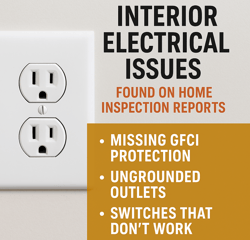
Missing GFCI Protection in Kitchens, Bathrooms, and Laundry Rooms
One of the most common notes on inspection reports is the absence of Ground Fault Circuit Interrupter (GFCI) protection.
- Why inspectors flag it: GFCIs protect people from shock by shutting off power if the circuit detects an imbalance. They are required in areas where water and electricity are close together.
- Where it’s required: Kitchens, bathrooms, laundry areas, unfinished basements, garages, and exterior receptacles.
- Correction: Installing GFCI outlets or breakers. It’s a relatively quick and affordable upgrade, and it can dramatically improve safety.
Ungrounded Outlets (2-Prong Receptacles)
Older homes often still have ungrounded two-prong outlets, which inspectors always note.
- Why it happens: Homes built before the 1960s were commonly wired without a ground.
- Why it matters: Without grounding, sensitive electronics and appliances have no safe path for stray electrical current, which can cause shocks or damage.
- Correction: Options include rewiring with grounded cable, installing a GFCI outlet as a safe (though partial) upgrade along with installing three-prong outlets labeled “No Equipment Ground.”
Improperly Wired or Reversed Polarity Outlets
A simple but common inspection finding is outlets wired incorrectly.
- Why it happens: DIY work, quick fixes, or handyman wiring often result in miswired receptacles.
- Why it matters: Reversed polarity means the hot and neutral wires are swapped. This can damage electronics or create a shock hazard.
- Correction: Testing and re-terminating outlets properly. Electricians use inexpensive testers to find and correct these relatively quickly.
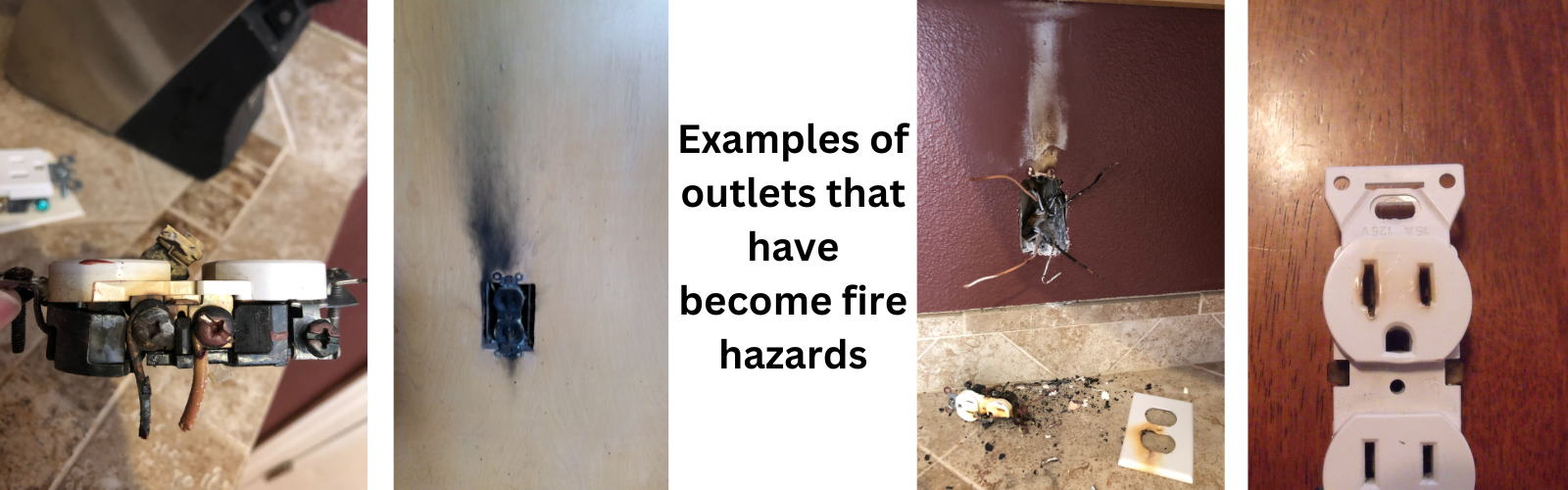
Loose Outlets, Switches, or Missing Cover Plates
Inspectors almost always note loose devices or missing cover plates.
- Why it happens: Over time, outlets loosen in their boxes, or cover plates break or go missing.
- Why it matters: Loose devices can lead to poor connections and overheating. Missing cover plates expose live wires.
- Correction: Properly securing outlets and replacing missing or damaged cover plates.
Open Splices or Improper Junction Boxes
Electrical connections (splices) must always be made inside an approved box with a cover.
- Why inspectors flag it: Open splices are sometimes found in attics, crawlspaces, or behind walls where DIY work was done.
- Why it matters: Exposed connections are fire hazards and violate code.
- Correction: Install an approved electrical box and cover, with secure connections.
Smoke Detectors Missing or Outdated
A frequent note on reports is missing, inoperative, or outdated smoke detectors.
- Why inspectors note it: Smoke detectors last for 10 years. Inspectors test them for presence and function.
- Why it matters: Working smoke detectors save lives. In Oregon, current standards also require carbon monoxide detectors in homes with fuel-burning appliances or attached garages.
- Correction: Replace old or missing detectors with modern, interconnected smoke/CO units with 10-year built in batteries.
Switches That Don’t Work or Don’t Seem to Control Anything
This is one of the most frustrating inspection report items for buyers.
- Why it happens: Sometimes a switch was abandoned during remodeling, or wiring changes left it disconnected. Other times it may control a switched outlet that isn’t obvious.
- Why it matters: While not always a safety issue, it raises questions about what else may have been altered. Sometimes it reveals wiring that was left incomplete or improperly terminated.
- Correction: An electrician can trace the circuit to determine what the switch was intended for and correct any improper terminations.
Multi-Generational Wiring
This refers to wiring that has been modified multiple times over the life of the home, often by different owners or contractors, leaving a “patchwork” system.
- Why inspectors call it out: They see inconsistent wiring methods, splices, or mixed types of wiring.
- Why it matters: It may not be unsafe by itself, but it often signals that unpermitted or uninspected work has been done. It can also make troubleshooting and future upgrades more complicated.
- Correction: A licensed electrician should review the wiring for safety, bring it up to code where necessary, and clean up any poor workmanship.
Permits Were Not Pulled for Previous Electrical Work
Sometimes inspectors note that recent work looks newer than the rest of the home but no permits are on record.
- Why it happens: Homeowners sometimes skip permits to save time or money.
- Why it matters: Without permits and inspections, there’s no guarantee the work was done safely or to code. It can also create problems during resale or insurance claims.
- Correction: While inspectors sometimes can’t force permits retroactively, a licensed electrician can evaluate the work and, in some cases, help get it permitted properly through the local building department.
Why Inspectors Flag Interior Electrical Items
Home inspectors aren’t electricians, but their role is to call out visible problems, safety concerns, or anything unusual. Interior electrical issues are often easy to spot and make up a large portion of most reports.
- Minor items: Missing cover plates, loose outlets, or switches that don’t seem to do anything.
- Moderate items: Missing GFCI protection, ungrounded outlets, or reversed polarity.
- Serious items: Open splices, questionable unpermitted work, or evidence of multi-generational wiring that raises safety concerns.
Final Thoughts
Home inspection reports can feel overwhelming, especially when they include several electrical notes. But not every issue is a red flag that should scare you away from a home. Many are simple, affordable corrections.
The important thing is to understand which items are minor and which require urgent attention. Electrical safety is nothing to gamble with, and a licensed electrician can quickly tell you what’s a five-minute fix versus what needs a larger investment.
If you’re buying a home in Sherwood, Tualatin, Wilsonville, or anywhere in the Portland metro area, I can review your inspection report, explain the findings, and take care of any necessary corrections so you can move forward with peace of mind.

